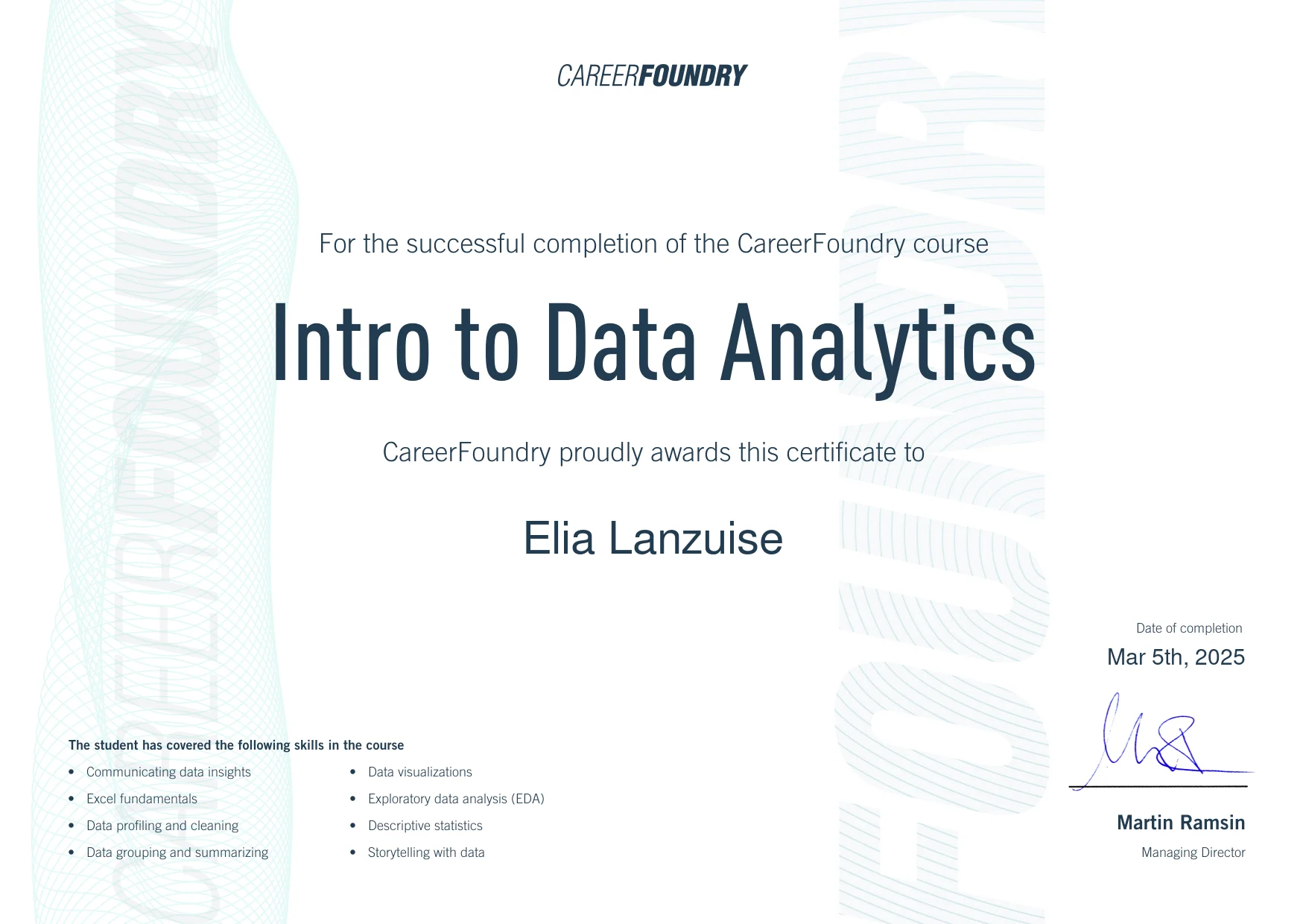
CareerFoundry Intro to Data Analytics
Completed March 2025
My CareerFoundry Data Analytics training gave me a structured foundation across Excel, Tableau, SQL, Python, data cleaning, statistics, data ethics, dashboard design, and business-facing analysis. This page documents the program, the modules completed, and how that training supports the practical operations analytics work shown across my portfolio.
Project-based training with mentor and tutor support.
Completed through a structured remote learning pathway.
Supported by statistics, data cleaning, and storytelling.
Training converted into real case studies and dashboard work.
The most valuable part of the training was not simply learning individual tools. It was learning the full analytical workflow: define the business question, inspect the data, clean and validate it, analyse patterns, build visual outputs, and communicate what the numbers mean for a real decision.
Each project started with a business question or stakeholder problem, not just a technical exercise. That is the same approach I use when writing about operations analytics and reporting.
The training covered the tools most relevant to analyst work: Excel for structured analysis, Tableau for storytelling, SQL for databases, and Python for cleaning, exploration, and reproducible workflows.
The modules led into practical case studies, dashboards, presentations, and documented analysis workflows that support my current portfolio and blog work.
The program moved from analytics fundamentals into data preparation, visualisation, SQL, Python, ethics, and applied project work. Below is the practical breakdown of what each training area developed.
Covered the end-to-end analyst workflow: understanding the business question, inspecting datasets, cleaning data, exploring patterns, developing insights, and presenting findings to stakeholders.
Focused on business requirements, question framing, research design, dataset profiling, duplicate checks, pivot tables, VLOOKUP, descriptive statistics, and Excel-based analytical reporting.
Developed Tableau skills for analytical charts, maps, dashboards, storyboards, stakeholder presentations, trend analysis, geographic variation, distributions, and relationship analysis.
Covered relational databases, PostgreSQL, pgAdmin, ERDs, joins, filtering, aggregation, subqueries, CTE-style thinking, exported query outputs, and presentation-ready database analysis.
Built Python-based analytical workflows using Anaconda, Jupyter, pandas, NumPy, cleaning routines, type checks, missing value checks, merges, aggregations, feature creation, and exported analysis outputs.
Strengthened data quality judgement, privacy awareness, bias detection, transparent reporting, methodology thinking, predictive and time-series foundations, and professional portfolio communication.
Extended the training into more applied dashboard thinking, stakeholder-facing outputs, business performance views, and the decision-making layer that turns analysis into something operational teams can use.
Focused on Python visualisation workflows using pandas, Matplotlib, Seaborn, chart selection, exploratory graphics, dashboard-style outputs, and communicating patterns in structured data.
These certificates document the formal completion points across the training pathway. They are included here to make the education record transparent and easy to verify alongside my skills and project work.
Completed March 2025
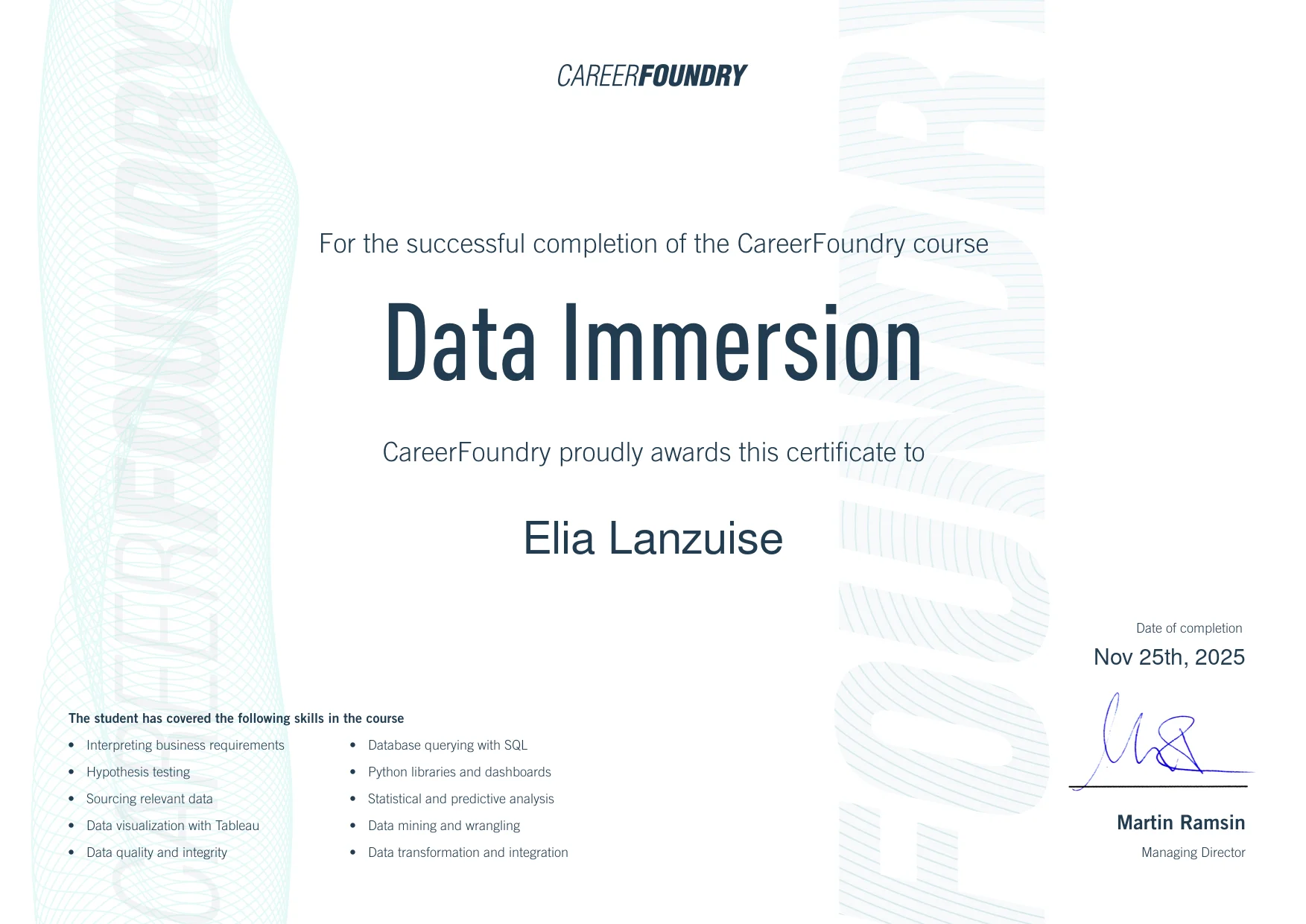
Completed November 2025
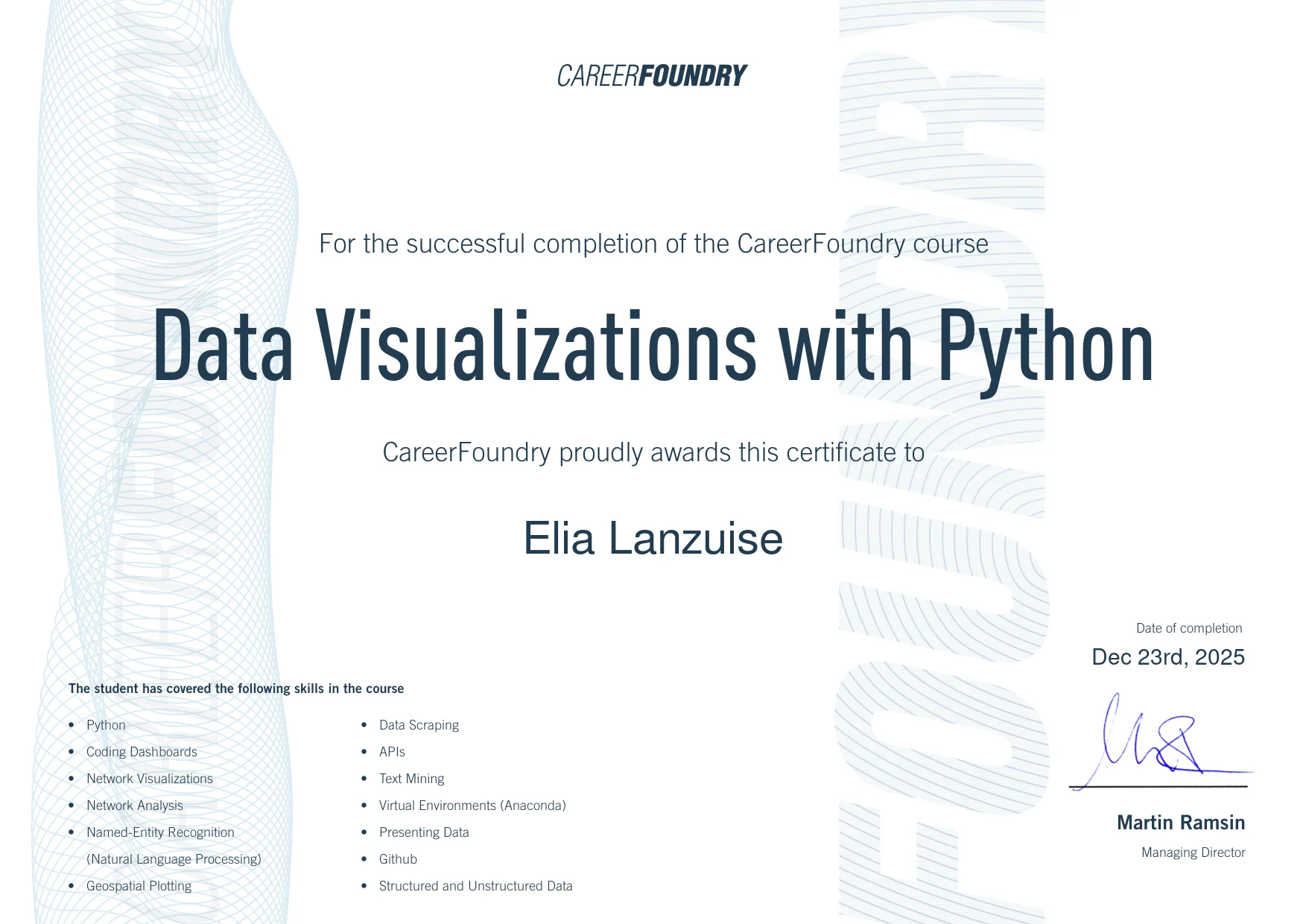
Completed December 2025
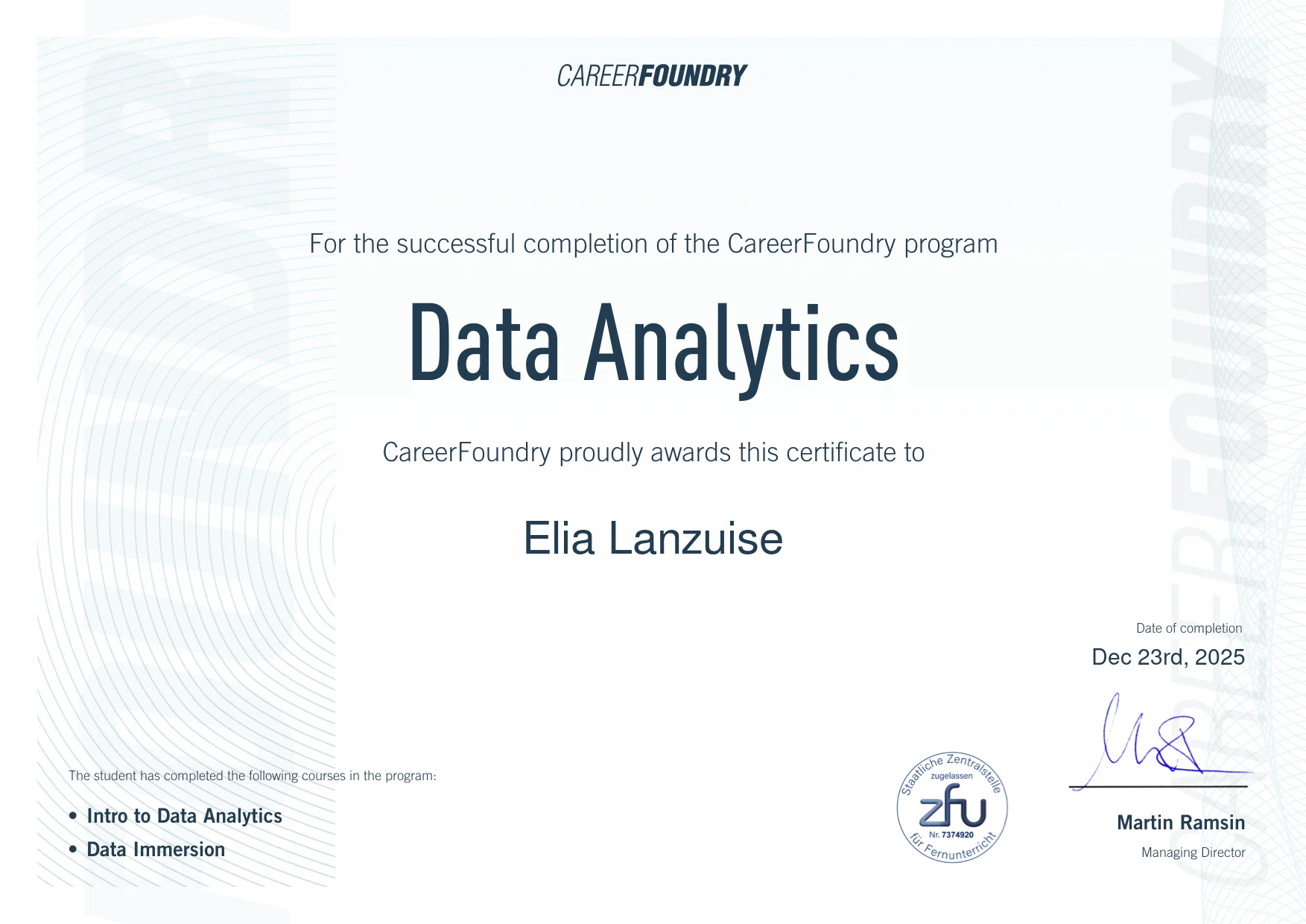
Completed December 2025
The goal of this page is not to show certificates in isolation. The important part is how the training connects to the work I now publish: operational reporting, dashboards, business performance analysis, and data-backed decision support.
The program reinforced a structured process: define the problem, profile the data, clean it, validate it, analyse it, and communicate the decision value clearly.
SQL training strengthened my ability to understand relational data, join tables properly, aggregate business metrics, and document query logic for repeatable analysis.
Tableau and dashboard modules helped turn raw analysis into visuals that explain performance clearly for non-technical stakeholders.
Python training added reproducible data cleaning, exploratory analysis, merging, feature creation, and visualisation workflows using notebooks and common data libraries.
The ethics and applied analytics modules reinforced data quality, bias, privacy, transparency, and the need to explain analytical limits honestly.
The training helped connect analysis to business questions, which is the same approach I use in my operations analytics articles and case studies.
The certificates show the education pathway. The case studies show how those skills are applied to business problems, dashboards, databases, and operational decision-making.